- Home
- Cakes, Pies & Cheesecakes
- Old-Fashioned Cakes
- Old Fashioned Cream Cake Recipe
Old Fashioned Cream Cake Recipes: A Victorian Treasure Worth Reviving
By Don Bell / Recipe Archivist and Compiler
Close your eyes for a moment and imagine a gracious Victorian parlor, the scent of warm vanilla drifting from the kitchen, and a tall, snow-white cake sitting proudly at the center of the table. That is the world that gave us the old fashioned cream cake recipe. One of the most beloved and elegant desserts of the 19th century!
Known in its heyday as an "Ice Cream Cake" (despite containing not a drop of ice cream!), this multi-layered sponge was the showstopper of its era, gracing the tables of church socials, family celebrations, and even the kitchens of the White House. It earned its fanciful name either because its light, creamy texture was said to taste as dreamy as ice cream, or because it was fashionable to serve it alongside a dish of the frozen treat. Either way, one taste and you will understand why Victorian bakers were so proud of it.
What sets this cake apart from every other white layer cake you have ever made is the combination of its whisper-thin, feather-light sponge layers and its lavishly thick, silky boiled icing filling. These are not merely cake layers with a smear of frosting between them. These are generous, cloud-like layers of cream filling sandwiched between the most delicate white sponge imaginable, a cake so special that one Victorian cookbook author declared it nothing less than the "Queen of All Cakes."
On this page, you will find a hand-picked collection of authentic old fashioned cream cake recipes drawn from some of the most treasured vintage cookbooks of the Victorian and Edwardian eras, spanning from 1877 to 1913. Each one has its own personality, its own little secret, and its own place in culinary history. Whether you are a seasoned baker or trying your hand at a vintage recipe for the very first time, these timeless cakes are sure to delight everyone lucky enough to sit at your table.
The 1877 Buckeye Cookery Cream Cake Recipes
Buckeye Cookery and Practical Housekeeping (1877)
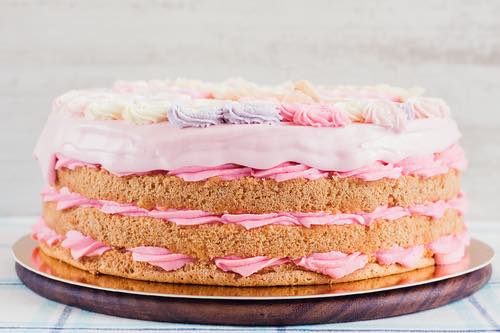 Old Fashioned Cream Cake with Decoration Icing
(Source: ©TorriPhoto/Depositphotos.com)
The Buckeye Cookery and Practical Housekeeping is one of the most remarkable cookbooks of the 19th century, and it has a wonderfully heartwarming origin story. It began life in 1876 as a charity project undertaken by the women of the First Congregational Church in Marysville, Ohio, who compiled their finest, most carefully tested recipes to raise funds for their congregation.
The little recipe book was such a success that it was expanded and republished in 1877, eventually becoming one of the premier cookbooks of the entire century. The recipes it contains were contributed by real home cooks, women like Mrs. Dr. D. H. Moore of Wesleyan College in Cincinnati. It gives them an authenticity and a warmth that no professional chef's cookbook can begin to match. These are the recipes that real families made, loved, and passed down.
This section gives you two cream cake recipes from that beloved 1877 volume: a classic white cream cake with boiled icing, and the extraordinary Almond Queen Cake that's so impressive its contributor declared it the "Queen of All Cakes." See whether you agree!
The Original Old Fashioned Cream Cake: Rich, White, and Heavenly Light
This is the foundational old fashioned cream cake recipe of the Victorian era — pure, simple, and utterly delicious. Notice the clever baker's tip tucked right into the ingredients: you can substitute one cup of cornstarch for one cup of the flour to produce an even more delicate, melt-in-the-mouth crumb.
The boiled icing, contributed by Mrs. Dr. D. H. Moore, is poured hot over whipped egg whites and beaten until silky and cool. It's a technique that produces a glossy, marshmallow-like filling that is simply irresistible. Try serving this cake on a pretty cake stand with a pot of Earl Grey tea for a truly authentic Victorian afternoon tea experience.
A note worth mentioning: a very similar recipe appears in My Pet Recipes Tried and True (1900), which suggests flavoring the boiled icing with orange rather than vanilla giving a lovely variation that adds a bright, citrusy note to the filling and is well worth trying!
Two cups sugar, one of butter, three and a fourth cups flour, one-fourth cup sweet milk or cream (some take two cups flour, one cup cornstarch, and one of sweet milk), two teaspoons baking powder, whites of eight eggs, flavor and bake (375°F) layers in jelly tins.
Boiled Icing Recipe
Boil two and a half cups powdered sugar in a half teacup water, stirring constantly; when thick and clear, pour boiling hot over the well-whipped whites of three eggs, beat till nearly cold, flavor and spread on cakes. —Mrs. Dr. D. H. Moore, Wesleyan College, Cincinnati, Ohio
Almond Queen Cake: The Cake Filling Recipe That Earned a Royal Title
If the classic cream cake is the queen of the Victorian dessert table, then this Almond Queen Cake is the queen's crown jewel. What makes this recipe truly extraordinary is it's a filling — a rich, fragrant almond cream made with pounded almonds, butter, sugar, and eggs, cooked on the stove top until thick and luscious.
Though simple, it's a filling of remarkable sophistication for a home cook's recipe, and it elevates this cake far beyond a simple layer cake into something genuinely special. The contributor's bold declaration that this is "the Queen of All Cakes" was no idle boast. A light dusting of powdered sugar over the top makes for a simple but elegant presentation.
Make good sponge cake (as above), bake half an inch thick in jelly pans, and let them get perfectly cold.
Take a pint of the thickest sweet cream, beat until it looks like ice cream, make very sweet, and flavor with vanilla; blanch and chop a pound of almonds, stir into cream, and put very thickly between each layer. This is the "Queen of All Cakes." —Miss Mattie Fullington
Aunt Babette's 1889 Old Fashioned Cream Cake Recipe: A Classic
Aunt Babette's Cook Book (1889)
Aunt Babette's Cook Book holds a remarkable and well-deserved place in American culinary history. Published in 1889, it was the first bestselling cookbook written specifically for American Jewish households, and it sold an astonishing 10,000 copies in its very first year!
The author, whose real identity remains a delightful mystery (she published under the warm, familiar pen name "Aunt Babette"), had a gift for making even the most ambitious recipes feel approachable and achievable for the home cook, and her cream cake recipe is a perfect example of that gift.
Aunt Babette's Five-Layer Cream Cake With Citric Acid Filling
This is the kind of recipe that sets Aunt Babette apart from every other Victorian cream cake in this collection. While most recipes call for a simple boiled icing or a vanilla cream filling, Aunt Babette's filling introduces a small but fascinating ingredient: citric acid. This tiny addition gives the filling a subtle, bright tartness that cuts beautifully through the richness of the cream and sugar, creating a perfectly balanced flavor that is sophisticated without being complicated.
The result is a five-layer cake of impressive height and elegance. It's exactly the kind of showpiece that would have caused a sensation at any Victorian gathering. If you cannot find citric acid at your local grocery store, check the canning and preserving aisle, or look in a pharmacy or online. It's well worth tracking down for this recipe.
Take one cup of butter and two cups of pulverized sugar rubbed to a cream. Then add gradually one cup of milk or cream, and three cups of sifted flour, with two teaspoonfuls of baking powder sifted into the flour and last the stiff-beaten whites of eight eggs. Bake (375°F) in thin layers. Use the following cake filling. This quantity will make about five thin layers.
Cream Cake Filling
Four cups of powdered sugar, one small cup of boiling water. Boil until clear and thick like syrup and then pour on the beaten whites of four eggs, beating as you pour in the syrup, and stir until cold. Then add one teaspoonful of citric acid (pulverized, of course). Flavor with vanilla and spread between layers and on top.
A Lighter Old Fashioned Cream Cake Recipe From 1913
Ice Creams, Water Ices, Frozen Puddings (1913)
The book Ice Creams, Water Ices, Frozen Puddings Together With Refreshments for all Social Affairs, with its long and descriptive Victorian title, was originally published in 1889 and revised in 1913, and it reflects the gracious entertaining culture of the Gilded Age, when hosting a social affair meant presenting your guests with the most beautiful and delicious refreshments imaginable.
The cream cake recipe it contains is notably different from the others in this collection in one very interesting way: it uses water instead of cream in the cake batter itself, and calls for only five egg whites rather than eight. The result is a lighter, more delicate sponge that's less rich than the Buckeye or Aunt Babette versions, but with a wonderful airiness that makes it well-suited to warm-weather entertaining.
This is the kind of cake you could imagine being served at a summer garden or patio party, alongside a glass of lemonade and a bowl of fresh strawberries.
Cream Cake With Frosting: Elegant, Lighter, and Surprisingly Simple
Don't let the elegant appearance of this three-layer cake intimidate you. It's one of the more straightforward recipes in this collection, and the results are genuinely beautiful. The key to its success is the simple frosting, which is made with the whites of two eggs and enough powdered sugar to form a stiff, glossy icing that sets firmly and slices cleanly.
This makes it an excellent choice if you are planning to make the cake in advance, as it holds its shape and presentation beautifully for several hours. For a lovely finishing touch, press a few blanched almond halves or a scattering of edible dried rose petals into the frosting before it sets.
Ingredients: 1-1/2 cupfuls of sugar, 2-1/2 cupfuls of flour, 1/4 cupful of butter, 1 cupful of water, 2 rounding teaspoonfuls of baking powder, whites of five eggs.
Method: Cream the butter, adding slowly the sugar. Sift the flour with the baking powder. Add the water and flour alternately to the sugar mixture, and beat well. Fold in the well-beaten whites, and bake in three layers (375°F).
Simple, Soft Icing
Put together with a soft icing made from the whites of two eggs. Or use the special cream cake frosting recipe given below.
The White House Cream Cake Frosting: A Presidential Finishing Touch
The White House Cook Book (1913)
Few cookbooks carry the prestige and authority of The White House Cook Book. First published in 1887 by Hugo Ziemann, the steward of the White House, and Mrs. F. L. Gillette, it was an immediate sensation and went through dozens of editions over the following decades, with the 1913 edition being among the most widely circulated.
The book drew on the actual recipes and entertaining traditions of the White House kitchen, lending every recipe within it an air of occasion and grandeur. The cream cake frosting and filling recipe it contains is a masterclass in simplicity and elegance: a boiled icing of just two ingredients, sugar and water, poured over beaten egg whites to create a filling of extraordinary silkiness and sweetness.
This is the kind of frosting that transforms a good cake into an unforgettable one, and it works beautifully with every single cream cake recipe on this page.
Boiled Icing and Filling: The Secret That Makes Any Cake Extraordinary
Think of this recipe as your universal cream cake finishing kit — a timeless boiled icing that pairs perfectly with any of the sponge recipes on this page. The technique of pouring boiling hot sugar syrup over beaten egg whites is the classic Victorian method for creating a cooked meringue-style icing, and it produces results that no simple buttercream can match: glossy, billowy, and perfectly sweet without being cloying.
The secret to success here is timing. You must pour the syrup in a slow, steady stream while beating constantly, and do not stop beating until the icing has cooled to room temperature and holds stiff, glossy peaks. It is well worth the effort. Spread it generously between every layer and over the top and sides of the cake for a truly spectacular presentation.
Three cups of sugar, one of water; boil to a thick, clear syrup, or until it begins to be brittle; pour this, boiling hot, over the well-beaten whites of three eggs; stir the mixture very briskly, and pour the sugar in slowly; beat it, when all in, until cool. Flavor with lemon or vanilla extract. This, spread between any white cake layers, answers for a simple Cream Cake.
Grandma's Baking Secrets: Old-Fashioned Tips for a Perfect Cream Cake Every Time
Grandma's Tip
The luscious, creamy fillings and the multi layers of moist white sponge are what really set the cream cake apart. Don't skimp on the filling. Double the filling recipe should you need to. Be very generous!
Baking a Victorian cream cake is a wonderfully rewarding experience, but these old recipes were written for cooks like Grandma who already knew their way around a kitchen. They understood what a "slow oven" meant, who knew instinctively when a batter had been beaten enough, and who could judge a "scant cup" by feel rather than by measurement. If you are coming to these recipes fresh, a few explanations and tips will make all the difference between a good cake and a truly great one.
These moist dessert cakes are actually simple to make, but they are finicky regarding cooking time and oven temperature, so keep a very close eye on them while they bake. DO NOT OVER BAKE. And, since the cake's lightness comes from the air trapped within the batter, DO NOT skimp on the time spent in beating.
Common Baking Problems and Solutions
- My cake layers are too thick and dense: The most common cause is over-measuring the flour. Always spoon flour into your measuring cup and level it off with a straight edge rather than scooping directly from the bag, which compacts the flour. Also, make sure your baking powder is fresh. Old baking powder loses its leavening power and produces flat, dense layers.
- My egg whites won't whip to stiff peaks: Make sure your bowl, beaters, and every utensil that touches the egg whites are completely clean and free of any grease or egg yolk. Even a tiny amount of fat will prevent the whites from whipping as they should. Room-temperature egg whites whip more easily and to greater volume than cold ones, so take your eggs out of the refrigerator about 30 minutes before you begin.
- My boiled icing is grainy or crystallized: This usually happens when sugar crystals form on the sides of the pan during boiling. Brush the sides of the pan with a pastry brush dipped in cold water as the syrup boils to dissolve any stray crystals before they can seed the batch.
- My cake layers are over baked and dry: These thin layers bake very quickly — often in as little as 10 to 15 minutes. Check them early and often. The layers are done when the edges are just beginning to pull away from the sides of the pan and the top springs back lightly when touched. Do not wait for deep golden color! Remember, these are white cakes, and they should remain pale and creamy.
- My filling is too thin and runs out from between the layers: Make sure your cooked filling (such as the almond cream or the citric acid cream) is completely cold before spreading it between the layers. If it's still warm, it will be too fluid to hold its shape. Refrigerate the filling for at least an hour before assembling the cake.
Ingredient and Technique Tips
- Use the freshest cream you can find: Since cream is a starring ingredient in many of these older recipes, its quality matters enormously. Full-fat heavy cream will give you the richest, most flavorful results.
- Blanching almonds: For the Almond Queen Cake filling, blanching the almonds is essential. To blanch almonds, simply cover them with boiling water, let them sit for one minute, then drain and slip the skins off with your fingers. Dry them thoroughly before pounding or grinding.
- Pounding almonds: Victorian recipes call for "pounded" almonds because food processors did not exist! You can use a food processor to grind the blanched almonds to a fine, slightly moist paste. Add a teaspoon of sugar while grinding to prevent the almonds from turning into almond butter.
- Assembling the layers: For the most beautiful presentation, place your bottom layer on a cake stand or serving plate and spread the filling generously to the very edges. Stack the layers carefully, pressing down gently but firmly. Apply the final coat of icing to the top and sides with a palette knife or the back of a spoon, using long, sweeping strokes for a smooth finish or a swirling motion for a more rustic, old-fashioned look.
- Make it ahead: These cream cakes actually improve with a little resting time. Assemble the cake several hours before serving and refrigerate it lightly covered. The filling will set, and the flavors will meld beautifully. Remove from the refrigerator about 30 minutes before serving to allow the cake to come to room temperature.
Ready to Bake? Why This Timeless Cake Deserves a Place on Your Table
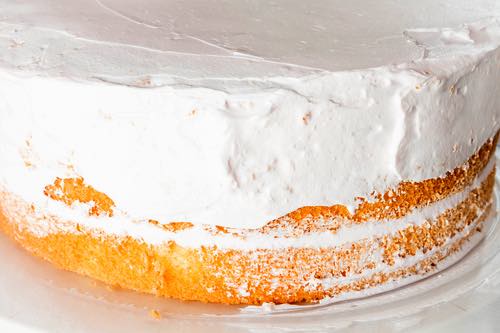 Old Fashioned Cream Cake Showing Its Layers
(Source: ©nalinrat/Depositphotos.com)
There is something deeply moving about baking a cake from a recipe that was first written down nearly 150 years ago and knowing that generations of home bakers before you stood at their own kitchen tables, beating egg whites by hand and watching their thin layers of sponge rise in a wood-fired oven, all in pursuit of the same beautiful result.
The old fashioned cream cake recipe is more than just a dessert. It's a living piece of culinary history, a connection to the gracious, generous spirit of Victorian home baking, and proof that the simplest ingredients — butter, sugar, cream, and eggs — can produce something truly extraordinary when handled with care and love.
Whether you choose the regal Almond Queen Cake, Aunt Babette's sophisticated five-layer creation, or the lighter, elegant 1913 version, you are baking a cake that has delighted families for generations. It's high time it delighted yours, too. So preheat that oven, separate those eggs, and get ready to create something genuinely special. Your family will love you for it!
This is the perfect cake for serving at birthdays and parties, as it always proves popular with cake lovers. Who doesn't like creamy fillings? Whether you want to make a special cake for a friend, or a lavishly decorated five-layer classic for a party, these old fashioned Victoria sponge cakes will serve you well.
You Might Like These
Old Fashioned Layer Cake Recipes - Delicious Homemade Layers
Get Grandma's old fashioned layer cake recipes and make beautiful cakes bursting with goodness and flavor. These homemade layer cakes look and taste amazing!
How to Make Icing Black: Unlock the Key to Stunning Baked Creations
Elevate your cakes and cupcakes with the power of black icing. Learn step-by-step how to make icing black and create bold, elegant frosting for your desserts.
Vintage Cake Recipes - Make Fancy Cakes for Any Occasion
Get Grandma's vintage cake recipes and enjoy serving homemade cakes proven to be delicious. Everybody loves them, and they're spectacular looking to serve.

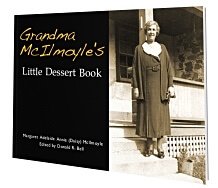
Sign Up now for GRANDMA'S DESSERT CLUB and download your FREE PDF COPY of Grandma McIlmoyle's Little Dessert Book. Also receive my regular Bulletin featuring classic recipes and nostalgia.

Don Bell, Founder & Archivist, Old Fashioned Dessert Recipes. Don has spent over two decades preserving heritage dessert recipes from handwritten family notebooks, recipe scrapbooks, and vintage cookbooks. His collection spans hundreds of authentic, old fashioned recipes presented exactly as originally written.

Like This Page? Please Share It
If you enjoyed reading this page and its old fashioned recipes, please consider sharing it. I choose to spend my time adding more recipes instead of posting on social media, so I rely on readers like you to help spread the word. Use the sharing buttons below!

Hi! I'm Don Bell, and I love sharing Grandma's heritage dessert recipes, and the nostalgia they bring to mind. Have fun making all your favorite desserts from childhood.

SCAN and have access to Grandma's Recipes on your CELLPHONE
Readers are saying…
I just briefly want to say thanks for publishing such a warm, cozy site that just feels like, well, home. —Dusty, U.S.A.
This website is extraordinary to people my age who remember their pasts fondly and miss all those who have gone before.
Your Grandma's homemade dessert recipes add greatly to those memories, and I wanted to tell you that your efforts here are very special indeed. —Maureen, Canada
You have a great site! So homey with precious recipes. —Miriam, USA
Homemade-Dessert-Recipes.com does not sell any personal information. This site uses cookies for its operation and to enhance your experience. Privacy Policy

Copyright © 2004–2026 by Don Bell
All Rights Reserved Worldwide.